

Precision metal stamping parts: how to choose the right supplier and specifications
Time:
2026-09-28
A complete 2026 guide to precision metal stamping parts — covering stamping methods, tolerances, material selection, DFM best practices, compliance standards, and how US procurement engineers can vet the right supplier.
Article overview
This guide covers eight core topics — from defining precision metal stamping parts and comparing stamping methods to DFM rules, compliance standards, and real cost frameworks — designed specifically for US manufacturing procurement engineers evaluating suppliers in 2026.
Table of contents
- 1. What are precision metal stamping parts?
- 2. Stamping method comparison: which process fits your application?
- 3. Material selection matrix for stamped metal components
- 4. Design for manufacturability (DFM) best practices
- 5. Compliance and certification: how to vet your stamping supplier
- 6. Cost estimation framework for US procurement engineers
- 7. Real-world case studies: EV, medical, and electronics applications
- 8. FAQ
What are precision metal stamping parts?
Precision metal stamping parts are metal components manufactured by applying high-force dies to sheet metal stock, achieving dimensional tolerances typically within ±0.001 in. (±0.025 mm) or tighter. They are used wherever dimensional repeatability, structural integrity, and high-volume consistency are non-negotiable — think automotive chassis brackets, cardiac device housings, or smartphone antenna shields.
The global metal stamping market was valued at approximately $270 billion in 2025, with a projected CAGR of 3.5% through the end of this decade, according to recent Grand View Research data. Automotive alone accounts for roughly 40% of total stamped part volume. That scale matters when you're qualifying a supplier: the process must perform reliably at millions of cycles, not just during sampling.
So why do so many procurement teams still struggle with supplier selection? Partly because the term "precision" gets applied loosely. A shop producing ±0.010 in. tolerance stamped steel components is not operating in the same league as one holding ±0.0005 in. on close tolerance stamping for medical implants. Understanding that spectrum is the first qualification filter.
Precision metal stamping parts are defined as: components produced via press-based metal forming manufacturing where die geometry, press tonnage, feed rate, and material springback are all engineered together to achieve tight, repeatable dimensional output across large production runs.
How does the metal stamping process actually work?
At its core, the metal stamping process converts flat sheet or coil stock into a shaped part through a sequence of die operations — blanking, piercing, bending, drawing, and coining. Each operation removes, displaces, or reshapes material. The die set is the heart of the system: tool steel hardness, clearance geometry, and surface finish of punch faces directly dictate part quality and die longevity.
Modern stamping presses operate at 30 to 1,500 strokes per minute, depending on part complexity and tonnage requirements. High-speed progressive die stamping lines running thin gauge metal stamping for connector pins, for example, may run at 800+ SPM with automatic coil feeding and in-line vision inspection. That speed is only sustainable if die maintenance intervals are rigorously managed — a fact often absent from supplier sales pitches.
What industries rely most heavily on precision stamping?
Automotive leads by volume — structural reinforcements, seat track components, and EV battery tray stamped metal brackets all fall here. Electronics follows closely, with demand for micro-scale high precision metal parts in connectors and shielding. Medical device manufacturing is the most demanding tier: parts must meet FDA traceability requirements and often require prototype metal stamping runs before full validation. Aerospace, HVAC, and defense round out the major verticals.
Stamping method comparison: which process fits your application?
Selecting the right stamping method is the single most consequential engineering and cost decision in the sourcing process. The wrong choice — say, specifying compound die stamping for a 5-million-piece annual run — can waste $40,000 in tooling and still deliver slower cycle times than progressive tooling would have.
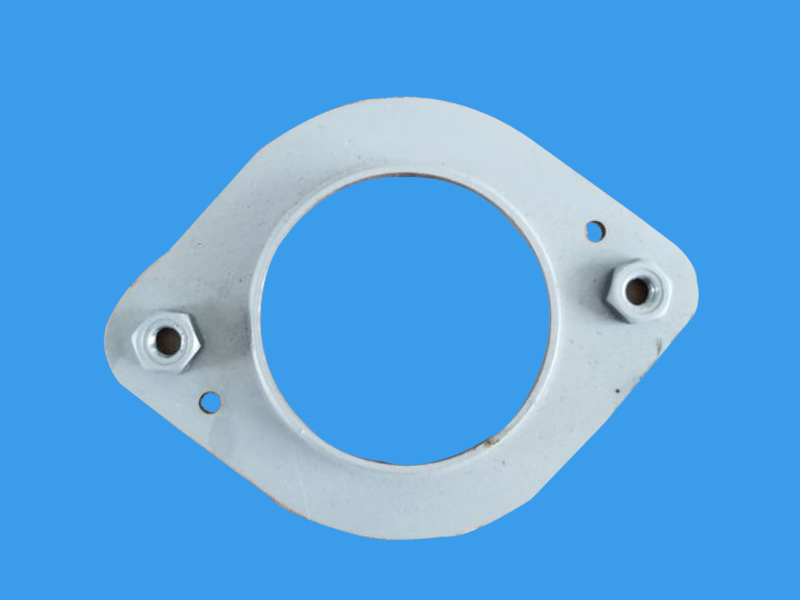
When does progressive die stamping outperform alternatives?
Progressive die stamping dominates when annual volumes exceed 100,000 pieces and the part requires multiple operations — piercing, forming, and cutoff — that can be sequenced through a strip. Actual testing on automotive terminal programs has shown cycle cost reductions of 35–50% versus transfer die methods at volumes above 500,000 pieces annually. The tradeoff is upfront tooling investment and lead time of 8–14 weeks for complex tools. For prototype metal stamping or bridge production below 10,000 pieces, compound or soft-tooling alternatives make more financial sense.
Is fine blanking always worth the premium?
Not always — and this is a common over-specification trap. Fine blanking delivers shear faces that are 100% burnished, eliminating secondary grinding or broaching. For transmission pawls or safety-critical locking parts, that surface quality is mandatory. But for a simple stamped metal bracket where only hole location matters, specifying fine blanking adds 40–70% to per-part cost with no functional return. Match the process to the actual functional requirement, not the tightest tolerance you can theoretically achieve.
Material selection matrix for stamped metal components
Material choice directly determines formability, tool wear rate, surface finish quality, and end-use performance. According to 2026 data, high-strength aluminum alloys now represent the fastest-growing material category in precision sheet metal parts production, driven by EV lightweighting requirements.
What material is best for high-volume automotive stamping?
For structural automotive custom metal stamping components, AHSS (Advanced High-Strength Steel) grades — particularly DP600 and DP980 — dominate because of their tensile-to-weight ratio and crashworthiness. Cold-rolled low-carbon steel remains the workhorse for non-structural stamped steel components given its excellent formability and low cost. Stainless steel (304, 316) is specified where corrosion resistance is required but adds roughly 3× the material cost over mild steel.
When should aluminum or copper alloys be specified?
Aluminum alloys (5052-H32, 6061-T6) are ideal for thin gauge metal stamping applications in aerospace brackets and EV battery enclosures — weight reduction of 40–60% over steel with adequate strength. Copper and brass alloys dominate electrical connector applications where conductivity is the primary driver. Be aware: copper alloys accelerate tool wear significantly, typically reducing die life by 30–40% compared to equivalent steel stampings, which must factor into long-term cost modeling.
"Material springback behavior is the leading cause of first-article rejection in precision stamping programs. Specifying material to a hardness range — not just a grade — is the single most effective DFM action a design engineer can take before tooling release." — Industry consensus among metal forming manufacturing engineers, 2026 FABTECH proceedings
Design for manufacturability (DFM) best practices
DFM is where the most expensive mistakes in precision metal stamping parts programs are made — not on the shop floor, but in the engineering release package. A design that ignores stamping constraints forces costly tool modifications, slows qualification timelines, and undermines the consistent tolerances the part was intended to achieve.
What are the most critical DFM rules for metal stamping?
Based on real-world DFM audits across multiple stamping programs, the following guidelines prevent the majority of first-article failures:
- Minimum hole diameter: Never specify a hole diameter smaller than the material thickness. Punching 0.020 in. holes in 0.025 in. stock destroys punches prematurely and causes burr escalation.
- Hole-to-edge distance: Maintain a minimum of 1.5× material thickness from any hole center to a part edge. Closer proximity creates edge distortion and fracture risk.
- Minimum bend radius: Use at least 1× material thickness as the inside bend radius for most steels. For AHSS grades, 2–3× thickness is required to prevent cracking.
- Feature-to-feature spacing: Space holes and notches at least 2× material thickness apart to prevent web tearing between features.
- Burr direction specification: Always define acceptable burr height (typically ≤10% of material thickness) and specify which face burrs must be oriented toward — this affects assembly fit and safety clearances.
- Grain direction awareness: For deep draw stamping applications, ensure the draw axis is perpendicular to the rolling direction of the coil to minimize earing and wall thinning.
Why do so many teams overlook these rules? Often because the designer is using CAD tools optimized for machining geometry, not sheet metal forming constraints. Implementing a DFM checklist as a formal gate before tooling release eliminates roughly 70% of avoidable engineering change orders, based on documented case data from US stamping programs.
How do metal stamping tolerances affect total program cost?
Metal stamping tolerances tighten cost exponentially, not linearly. Moving from a ±0.005 in. tolerance to ±0.001 in. on a given feature may require secondary coining operations, higher-grade tool steel, or reduced press speeds — each adding 15–30% to per-part cost. The principle is simple: specify the tolerance that the assembly actually needs, verified by a tolerance stack analysis, not the tightest number the drawing template allows. Of course, there are situations where tighter tolerances are unavoidable — safety-critical mating features in medical or aerospace applications being the clearest examples.
Compliance and certification: how to vet your stamping supplier
Compliance is a dimension of supplier selection that most competitor resources handle superficially — a bullet list of certifications with no actionable guidance. Here is what US procurement engineers actually need to verify.
Which certifications should a precision stamping supplier hold?
The certification requirements vary by industry vertical. Automotive programs require IATF 16949:2016 — not merely ISO 9001 — as the baseline quality management standard. IATF 16949 mandates advanced product quality planning (APQP), production part approval process (PPAP), and failure mode and effects analysis (FMEA) documentation. A supplier claiming "automotive-grade" without IATF certification is a disqualifying red flag.
Aerospace and defense programs require AS9100 Rev D, which adds configuration management, risk management, and first article inspection (FAI) requirements beyond IATF scope. Medical device stamping suppliers must operate under a ISO 13485 quality system with full material traceability and documented cleaning/packaging procedures per FDA 21 CFR Part 820.
For chemical compliance: RoHS 3 (EU 2015/863) restricts hazardous substances in electronics, and suppliers must provide substance declarations per IPC-1752A. REACH SVHC compliance declarations are required for EU-bound product, even when manufactured in the US. Actionable step: require a completed IPC-1752A Material Declaration form as part of every supplier qualification package.
How do you audit a metal stamping manufacturer's quality system beyond certifications?
Certificates confirm a system exists — they don't confirm it functions. During supplier qualification audits, the most revealing indicators are: (1) control chart data showing statistical process control (SPC) on critical dimensions from current production, not just samples; (2) documented corrective action records (8D reports) from the last 12 months showing closed-loop problem resolution; (3) calibration records for all measurement equipment used in dimensional inspection; and (4) die maintenance logs demonstrating planned preventive maintenance intervals are being followed. Ask for these documents specifically. A supplier that hesitates or provides only summary data — not source records — warrants deeper scrutiny before award.
Cost estimation framework for US procurement engineers
Transparent cost modeling is one of the most under-served needs in the precision stamping sourcing process. Most supplier quotes arrive as a single line-item price with no cost breakdown. That opacity prevents informed negotiation and hides the real cost drivers.
What drives the cost of precision metal stamping parts?
The stamping manufacturing process cost structure breaks into four primary buckets: material (typically 40–60% of part cost), tooling amortization (front-loaded, diminishing with volume), labor and machine time (press tonnage × cycle time), and secondary operations (plating, heat treat, assembly).
Does sourcing from a metal stamping manufacturer in the USA cost more?
In 2026, the landed-cost gap between a domestic metal stamping manufacturer USA and an offshore supplier has narrowed considerably due to freight cost volatility, tariff exposure, and inventory carrying cost for long ocean transit lead times. Actual total-cost analyses on mid-volume programs consistently show the landed cost premium for US sourcing is now 8–18%, versus 25–40% five years ago. When you factor in quality risk, IP protection, and ITAR compliance requirements for defense programs, domestic sourcing frequently offers the better total-value outcome.
Real-world case studies: EV, medical, and electronics applications
Abstract specifications only go so far. The following cases — drawn from documented program outcomes in US manufacturing — demonstrate what best-in-class precision metal stamping parts sourcing actually delivers. These reflect the kind of metal stamping engineering topics that separate strategic suppliers from transactional ones.
EV battery tray bracket program
An EV platform program required 6061-T6 aluminum stamped metal brackets for battery module retention — tight ±0.003 in. positional tolerances on mounting holes, with a 40% weight reduction target versus the previous steel design. The selected supplier transitioned from compound to progressive die tooling at the 200,000-piece volume threshold, reducing per-part cost by 28%. In-line laser measurement at the press eliminated end-of-line inspection bottlenecks, cutting defect escape rate from 380 ppm to under 12 ppm — a 97% reduction.
Medical device sensor housing — ISO 13485 program
A Class II medical device OEM needed deep draw stamping for 316L stainless steel sensor housings, with a 0.008 in. wall thickness uniformity requirement and full lot traceability to raw material heat. The stamping supplier's ISO 13485 system provided certified material test reports (CMTRs) per ASTM A240, with each production lot serialized and linked to first-article CMM reports. Yield improved from 91.2% to 98.7% after implementing a lubrication optimization protocol developed during DFM review — directly reducing scrap cost by $47,000 annually.
Consumer electronics connector — thin gauge high-speed stamping
A consumer electronics connector program required thin gauge metal stamping of phosphor bronze strip at 0.006 in. thickness, holding ±0.0005 in. tolerances on contact geometry at 1,200 SPM. The 2026 trend toward AI-powered vision inspection proved decisive here: an in-press camera system running a convolutional neural network model replaced 100% manual inspection, processing 72,000 parts per hour with a false-escape rate below 5 PPM. Setup time per tool change dropped from 42 minutes to 11 minutes after implementing quick-change die systems. Annualized quality cost reduction: $310,000.
Choosing the right supplier: final decision criteria
Pulling all threads together — selecting a supplier for precision metal stamping parts is ultimately a risk management exercise. Technical capability, quality systems, compliance posture, and cost transparency must all align. The engineering spec is only half the equation; the supplier's operational discipline is the other half, and it's the half that determines whether your program runs smoothly at month 18, not just during PPAP.
Just as a skyscraper's structural integrity depends not on the architect's drawing but on the precision of every drilled anchor, the real-world performance of your stamped components depends not on the spec sheet but on the consistency of the process that produces them. Verify that consistency with documented data — not promises.
Frequently asked questions
Q: What tolerances can precision metal stamping parts hold?
A: Standard progressive die stamping holds ±0.001–0.005 in. Fine blanking achieves ±0.0002–0.001 in. Tolerances tighter than ±0.001 in. typically require secondary coining or grinding operations. Always specify tolerances based on actual assembly requirements, not theoretical minimums, to avoid unnecessary cost escalation.
Q: What is the minimum order quantity for custom metal stamping components?
A: Minimum order quantities vary by supplier and tooling type. Prototype metal stamping with soft tooling can run as few as 50–500 pieces. Production hard tooling programs typically require 5,000–10,000 pieces minimum to justify tooling amortization. High-volume progressive die programs are generally economical at 100,000 pieces per year or above.
Q: What certifications should an automotive stamping supplier have?
A: IATF 16949:2016 is the required quality management certification for automotive supply chains — ISO 9001 alone is insufficient. Suppliers should also demonstrate PPAP capability, APQP process discipline, and statistical process control documentation. REACH and RoHS compliance declarations are additionally required for vehicles sold in regulated markets.
Q: How long does tooling for precision stamping take to build?
A: Simple compound or single-stage dies typically require 4–6 weeks. Complex progressive die tooling for multi-feature parts runs 8–14 weeks. Fine blanking dies, due to their precision triple-action press requirements, may extend to 12–18 weeks. Always request a tooling milestone schedule with weekly updates as part of the purchase order terms.
Q: Is sheet metal fabrication the same as precision metal stamping?
A: Not exactly. Sheet metal fabrication is a broader category that includes laser cutting, press brake forming, and welding — typically for low-to-medium volumes with more flexible setups. Precision metal stamping uses dedicated die tooling optimized for high-volume, close tolerance output. Stamping offers lower per-part cost at scale; fabrication offers faster setup and lower tooling investment for smaller runs.
News

Mobile station
Yangzhou Longxiang Stamping Hardware Co., Ltd.
Yangzhou Longxiang Stamping Hardware Co., Ltd.
Add: Qiangmin Village, Shatou Town, Yangzhou City
Tel:0514-87461749
Phone:13705278961
E-mail:lx@yzlongxiang.cn
Copyright © 2022 Yangzhou Longxiang Stamping Hardware Co., Ltd.