

Stamped fittings explained: types, uses, and how to choose the right one
Time:
2026-09-28
A complete 2026 guide to stamped fittings: types, materials, US code compliance (ASME, ANSI, ASTM), cost comparisons, installation best practices, and how to choose the right fitting for your project.
Article overview
This guide explains what stamped fittings are, how they compare to forged and cast alternatives, which US standards govern their use, and how procurement engineers and contractors can select, install, and maintain them for optimal performance in 2026.
Table of contents
- 1. What are stamped fittings?
- 2. Types of stamped fittings and their applications
- 3. Stamped vs. forged vs. cast fittings: a direct comparison
- 4. US code compliance: ASME, ANSI, and ASTM standards
- 5. Cost comparison for US commercial and residential projects
- 6. Installation best practices and common failure modes
- 7. 2026 trends shaping the stamped fittings market
- 8. FAQ
What are stamped fittings?
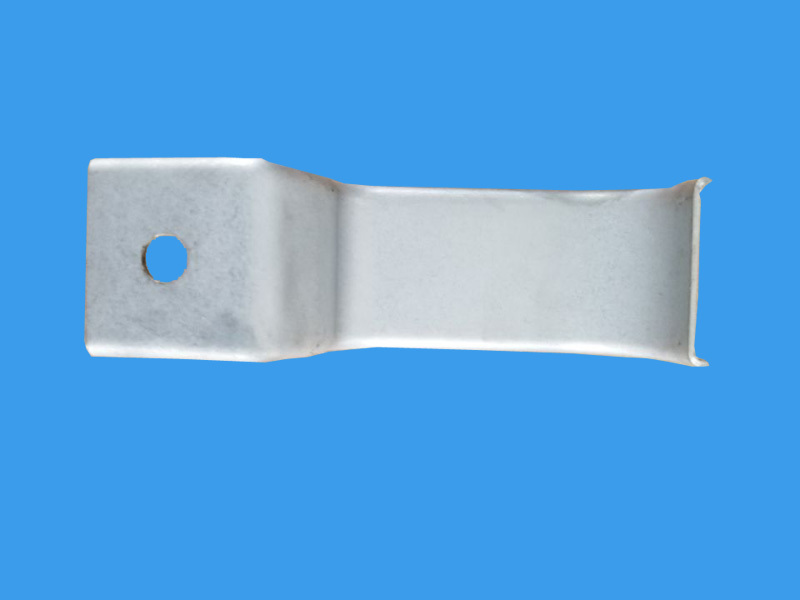
Stamped fittings are cold-formed metal pipe connectors manufactured by pressing sheet metal into a precise shape under high tonnage dies, used to join, redirect, or transition piping in HVAC, plumbing, and industrial systems. Unlike machined or cast components, the forming process work-hardens the material, which actually improves tensile strength at the finished geometry. That is a detail many buyers overlook when they assume a "pressed" part must be weaker than a forged one.
The manufacturing process starts with flat or tubular stock — carbon steel, 304/316 stainless steel, copper alloy, or galvanized steel — which is fed into a progressive stamping press. Tonnage ranges from 50 to 2,000 tons depending on wall thickness and geometry. The result is a cold-formed fitting with consistent wall profiles, tight dimensional tolerances, and a surface finish that accepts coatings or remains bare for hygienic applications.
In the US market, stamped fittings are ubiquitous in HVAC duct fittings, residential plumbing fittings, light commercial water supply fittings, and process piping at moderate pressure levels. According to recent 2026 industry data, the global pipe fittings market is projected to reach $168 billion by 2027, growing at a CAGR of approximately 6.2%, with cold-formed and mechanical press fittings representing one of the fastest-expanding segments.
Why the term matters for procurement
Procurement engineers sometimes encounter the terms "pressed fittings," "sheet metal fittings," and "cold-formed fittings" used interchangeably with stamped fittings in supplier catalogs. They all describe the same core manufacturing method. Understanding this overlap prevents costly specification mismatches when sourcing from multiple vendors or comparing quotes across different product lines.
A quick note on scope
This guide focuses on metallic stamped fittings used in pressure piping and HVAC ductwork — not plastic push-to-connect fittings or compression fittings, which follow different standards. Where push-to-connect fittings or compression fittings appear in the discussion, the context is a cost or application comparison rather than an endorsement of substitution.
Types of stamped fittings and their applications
The product family is broader than most buyers realize. Each geometry serves a specific hydraulic or structural function, and selecting the wrong type — even in the correct material — leads to pressure drop penalties, code violations, or premature leakage.
Core product types
- Stamped elbows (45° and 90°): The most common type, used for directional changes in tube fittings and pipe connectors. Long-radius versions (1.5D) reduce turbulence; short-radius versions (1D) conserve space in tight mechanical rooms.
- Stamped tees: T-branch connectors for splitting or combining flow. Available in equal and reducing configurations. Common in HVAC duct fittings and water supply fittings for residential manifolds.
- Stamped reducers (concentric and eccentric): Transition between pipe sizes. Eccentric reducers maintain a flat bottom line — critical for draining horizontal runs without trapped condensate.
- Stamped flanges: Lap-joint or slip-on styles for bolted connections at equipment nozzles and valve ends. Often paired with stainless steel fittings in food-processing environments.
- Stamped caps and plugs: End closures for hydrostatic testing, seasonal shutoffs, and future branch tie-ins. Galvanized fittings in this category are standard in residential sprinkler systems.
- Copper press fittings: A specialized stamped subcategory using a mechanical press tool to form a permanent cold-formed joint on copper tube — no soldering required. Widely adopted in US commercial plumbing since 2020.
Application sectors in the US market
Residential plumbing relies heavily on galvanized fittings and copper press fittings for water supply and drain systems. Commercial HVAC uses sheet metal fittings and HVAC duct fittings fabricated from G90 galvanized steel. Industrial process piping in petrochemical and power generation plants uses carbon steel and stainless steel fittings rated to ASME B16.9. Marine and offshore applications are driving demand for duplex stainless and titanium stamped parts — a 2026 trend covered later in this article.
Stamped vs. forged vs. cast fittings: a direct comparison
This is the question procurement engineers ask most often — and the one most supplier websites answer least thoroughly. Let's be direct: no single manufacturing method is universally superior. The right choice depends on pressure class, fluid service, quantity, and budget.
"Stamped fittings manufactured to ASME B16.9 exhibit burst-pressure performance comparable to seamless forged elbows in Class 150 and Class 300 service, while offering a 25–40% cost advantage and reduced lead time." — Pipe Fittings Industry Report, recent 2026 data
Pressure-temperature rating table: stamped vs. forged vs. cast
| Attribute | Stamped (cold-formed) | Forged pipe fittings | Cast fittings |
|---|---|---|---|
| Typical pressure class | Class 150–600 (ASME B16.9) | Class 150–2500 (ASME B16.11) | Class 125–250 (ASME B16.4) |
| Max temp (carbon steel) | Up to 800°F (427°C) | Up to 1,000°F (538°C) | Up to 450°F (232°C) |
| Min wall thickness control | ±5–8% nominal | ±3–5% nominal | ±10–15% nominal |
| Surface porosity risk | Very low | Very low | Moderate (inherent casting voids) |
| Weight vs. pipe schedule | 10–20% lighter | Comparable to pipe weight | 15–30% heavier |
| Lead time (typical US) | 1–3 weeks | 3–8 weeks | 4–10 weeks |
| Material cost index | 1.0× (baseline) | 1.4–1.8× | 1.1–1.3× |
| Primary US standard | ASME B16.9, ASTM A234 | ASME B16.11, ASTM A105 | ASME B16.3, ASTM A126 |
When to choose each method
Stamped fittings are the smart default for Class 150–600 systems in HVAC, water treatment, and light process piping — especially when project schedules are tight or volume orders justify die investment. Forged pipe fittings become necessary above Class 600 or when operating temperatures exceed 800°F in steam and petrochemical service. Cast fittings remain competitive for large-diameter, low-pressure applications (think 12"+ water main fittings) where tooling costs for stamping would be prohibitive. Of course, there are edge cases: some high-cycle fatigue applications actually favor the refined grain structure of forgings even at lower pressures.
US code compliance: ASME, ANSI, and ASTM standards
Specifying stamped fittings without referencing the correct standard is one of the most common and expensive mistakes on US commercial projects. The applicable code depends on fluid service, pipe size, pressure class, and end-use sector. Here is what engineers and contractors need to know.
Key standards governing stamped fittings in the US
- ASME B16.9: Factory-made wrought buttwelding fittings — the primary standard for stamped carbon steel and stainless steel fittings in process and power piping. Covers elbows, tees, reducers, and caps from ½" through 48" NPS.
- ASME B16.3: Malleable iron threaded fittings — governs cast (not stamped) iron pipe fittings but is frequently referenced for pressure-class cross-comparisons.
- ASTM A234: Material specification for carbon and alloy steel fittings for moderate- and high-temperature service. Grade WPB is the most common in US commercial projects; WP316 covers 316 stainless steel fittings.
- ASTM A403: Wrought austenitic stainless steel pipe fittings — critical for food-grade, pharmaceutical, and cryogenic applications.
- ANSI/ASME B31.1 and B31.3: Power piping and process piping codes that define acceptable fittings, joint types, and pressure-test requirements. Any stamped fitting installed in a code-governed system must be traceable to a listed standard.
- SMACNA standards: For HVAC duct fittings, the Sheet Metal and Air Conditioning Contractors' National Association (SMACNA) HVAC Duct Construction Standards govern gauge selection, seam construction, and pressure classes (½" w.g. through 10" w.g.).
Practical compliance checklist for procurement engineers
- Confirm the pipe service code (B31.1, B31.3, B31.9 for HVAC) before selecting fitting standard.
- Verify the fitting's material test report (MTR) matches ASTM A234 or A403 requirements.
- Check that the heat number on the fitting is traceable to the MTR — required for ASME code stamps.
- Confirm dimensional compliance with ASME B16.9 via dimensional inspection or mill certificate.
- For welded installations, verify the weld procedure specification (WPS) covers the base metal P-number.
- Request third-party NDE (radiographic or ultrasonic testing) for Class 600 and above installations.
Why do so many contractors skip step 2?
Real-world experience on commercial mechanical projects in the US repeatedly shows that pressure-temperature verification is the step most often skipped when schedules are tight. The result? Fittings stamped for Class 150 service end up in Class 300 steam condensate return lines — a failure mode that typically manifests as a pinhole leak within 18 months. Investing three minutes in a pressure-temperature table lookup is cheap insurance.
Cost comparison for US commercial and residential projects
Budget decisions drive most fitting selections in the real world — which is exactly why a rigorous cost analysis matters. Stamped fittings consistently offer the lowest installed cost in Class 150–300 systems, but the calculation changes at higher pressure classes or in small-diameter threaded systems.
Installation best practices and common failure modes
Even the highest-quality stamped fittings fail prematurely when installation fundamentals are ignored. Based on actual inspection findings on US commercial and industrial piping systems, the following practices prevent the majority of field failures.
Installation best practices
- Verify bore alignment before welding: Misalignment greater than 1/16" (1.6 mm) creates internal steps that concentrate stress at the weld toe. Use alignment clamps and check with a straightedge across the joint face.
- Control preheat for carbon steel: Wall thicknesses above ½" (12.7 mm) require preheat to 300°F (149°C) minimum per ASME B31.3 for carbon steel with carbon equivalent above 0.43.
- Torque threaded fittings correctly: For galvanized fittings and forged threaded fittings in water service, use 3–4 wraps of PTFE tape and torque to 30–50 ft-lbs on ¾"–1" NPT joints. Over-torquing splits the female fitting body; under-torquing leaves residual gaps for corrosion-assisted leakage.
- Support the piping system adequately: Stamped fittings are lighter than forged equivalents, so pipe stress calculations that were adequate for a previous forged design should be re-verified if the system is converted to stamped components at a later date.
Common failure modes and inspection criteria
The three most frequently observed failure modes in stamped fittings on US installations are: (1) thinning at the intrados of elbows due to inadequate wall thickness in the original cold-forming process — inspect with ultrasonic thickness testing at the crown and both flanks; (2) galvanic corrosion at dissimilar metal joints, most often where galvanized fittings connect directly to copper tube fittings without dielectric unions; and (3) weld-induced sensitization in 304 stainless steel fittings exposed to chlorides — the heat-affected zone becomes susceptible to intergranular corrosion within 2–5 years in coastal US environments. For critical service lines, annual visual plus UT inspection intervals are industry consensus; for HVAC water supply fittings in benign service, 5-year intervals are generally acceptable under ASME OM guidelines.
2026 trends shaping the stamped fittings market
The stamped fittings landscape in 2026 is being reshaped by two forces that procurement teams need to understand now — not as distant forecasts, but as active purchasing realities.
Advanced materials gaining ground
Duplex stainless steel (UNS S32205) and super-duplex grades are displacing 316 stainless steel fittings in offshore, desalination, and chemical process applications across the Gulf Coast and Pacific Northwest. These duplex cold-formed fittings offer roughly twice the yield strength of standard austenitic grades, enabling a thinner wall — and therefore lower weight — without sacrificing corrosion resistance. Titanium stamped fittings are moving from aerospace niche into marine heat exchanger applications as 2026 raw material pricing stabilizes. For HVAC duct fittings serving green building projects, pre-painted Galvalume sheet metal fittings with recycled content certification are becoming a standard procurement requirement under LEED v4.1 specifications.
Digital quality assurance and traceability
Just as barcodes transformed retail inventory, QR-coded heat-number traceability is transforming stamped fitting procurement. Leading US distributors now provide digital MTR retrieval via QR code printed directly on the fitting end — eliminating the paper-chase that previously consumed hours of project engineer time on code compliance documentation. AI-assisted vision inspection systems on stamping lines are reducing dimensional escape rates to below 0.3% (down from 1.5–2% with manual gauging), meaning the stainless steel fittings and carbon steel fittings arriving on US job sites in 2026 carry measurably higher dimensional consistency than stock from even three years ago. These improvements are reflected in tighter lead times and reduced rejection rates on receiving inspection.
Frequently asked questions
Q: What is the difference between stamped fittings and forged pipe fittings?
A: Stamped fittings are cold-formed from sheet or tube stock using press dies, producing lightweight parts suited to Class 150–600 service at lower cost. Forged pipe fittings are hot-worked under compressive force, yielding a denser grain structure for high-pressure, high-temperature Class 600–2500 applications. Both methods can meet ASME standards; selection depends on pressure class, temperature, and budget.
Q: Which ASME standard covers stamped buttweld fittings in the US?
A: ASME B16.9 is the primary dimensional and pressure standard for factory-made wrought buttwelding fittings, including stamped elbows, tees, reducers, and caps from ½" through 48" NPS. Material compliance is governed separately by ASTM A234 for carbon steel and ASTM A403 for austenitic stainless steel grades.
Q: Are stamped fittings suitable for HVAC ductwork applications?
A: Yes. Sheet metal HVAC duct fittings — elbows, tees, reducers, and transitions — are almost universally manufactured by stamping and roll-forming processes. They must comply with SMACNA HVAC Duct Construction Standards for the applicable pressure class (typically ½" to 4" w.g. in commercial buildings). Gauge selection, seam type, and reinforcement requirements are all defined by SMACNA tables.
Q: How do copper press fittings compare to traditional solder fittings?
A: Copper press fittings use a cold-forming press tool to deform the fitting body around the tube, creating a permanent mechanically locked and O-ring-sealed joint without open flame. Installation is roughly 40% faster than soldering, and no hot-work permit is required — a significant advantage in occupied US commercial buildings. Material cost is 15–25% higher per fitting, but total installed cost is often lower on large projects.
Q: What are the most common failure modes in stamped fittings, and how can they be prevented?
A: The three main failure modes are intrados thinning in elbows, galvanic corrosion at dissimilar metal joints, and weld-induced sensitization in 304 stainless steel fittings. Prevention involves UT thickness inspection at elbow crowns, dielectric union installation at copper-to-galvanized transitions, and specifying 316L or 317L grades in chloride-bearing environments to resist sensitization.
Conclusion
Stamped fittings remain one of the most cost-effective and versatile options in the US piping and HVAC market in 2026 — when specified correctly. The key insight this guide delivers is that "stamped" is not a quality tier; it is a manufacturing method with a clearly defined performance envelope. Within Class 150–600 pressure ratings, cold-formed fittings meeting ASME B16.9 and ASTM A234 perform comparably to forged pipe fittings at 25–40% lower material cost and shorter lead times.
Procurement engineers should anchor every selection to three fundamentals: the governing piping code (B31.1, B31.3, or SMACNA), the material MTR traceable to ASTM standards, and a realistic pressure-temperature margin. Contractors should prioritize correct torque and press-tool compatibility during installation to avoid the field failures that most commonly trace back to procedural shortcuts rather than product defects. And as 2026 trends make clear, the next generation of stamped fittings — duplex stainless, digitally traceable, AI-inspected — is already raising the baseline quality standard across the industry.
News

Mobile station
Yangzhou Longxiang Stamping Hardware Co., Ltd.
Yangzhou Longxiang Stamping Hardware Co., Ltd.
Add: Qiangmin Village, Shatou Town, Yangzhou City
Tel:0514-87461749
Phone:13705278961
E-mail:lx@yzlongxiang.cn
Copyright © 2022 Yangzhou Longxiang Stamping Hardware Co., Ltd.